
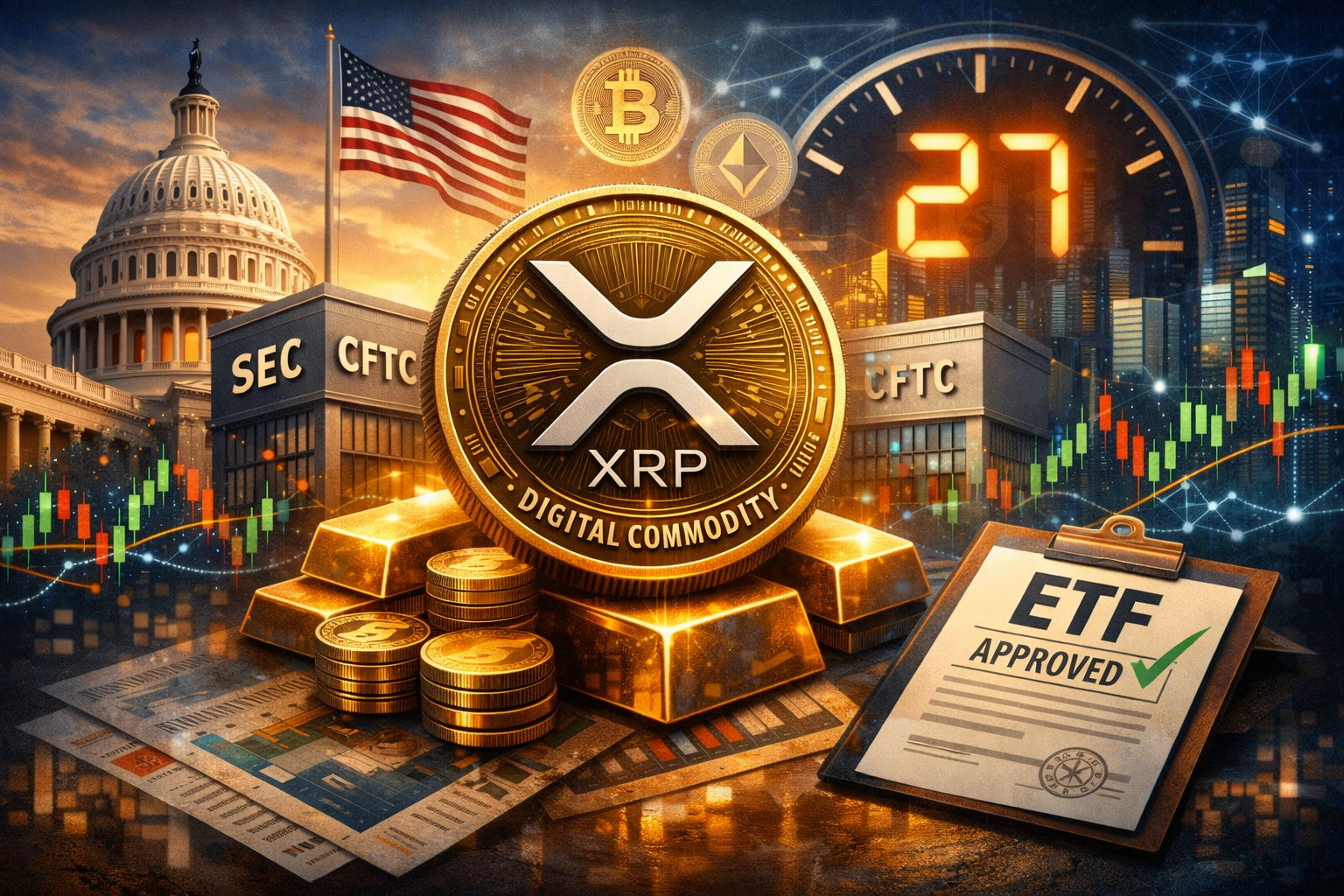
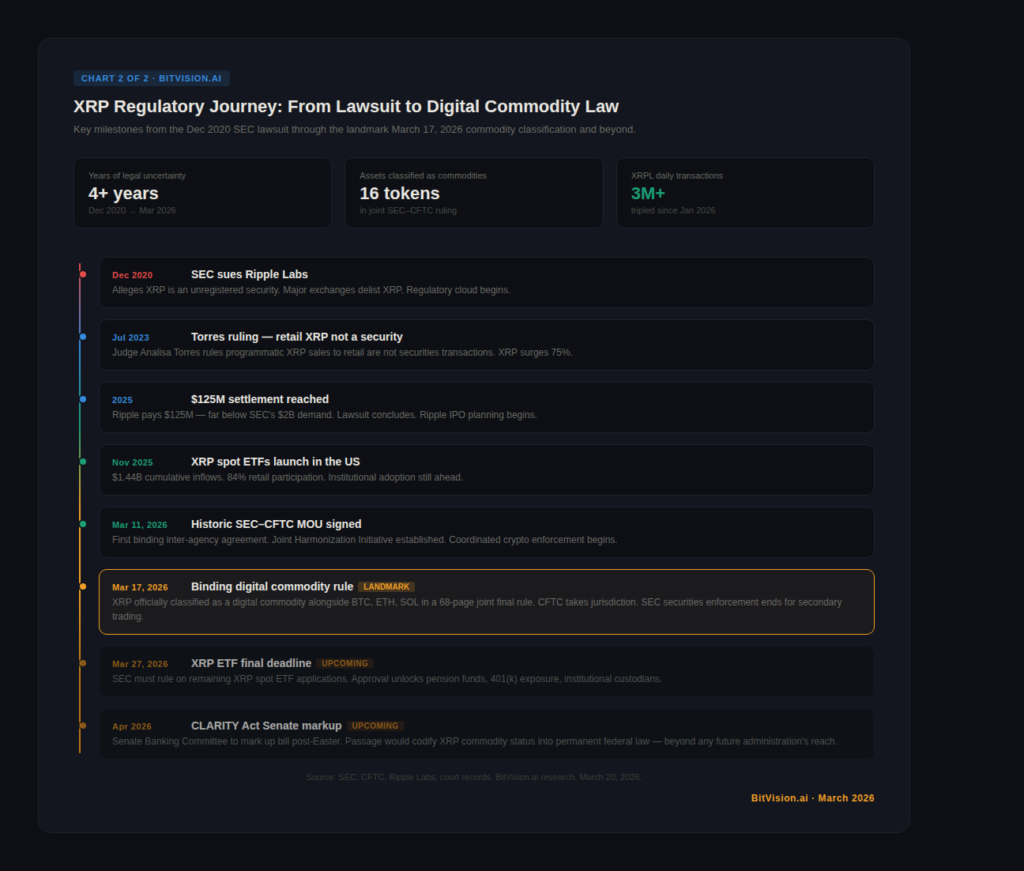
On March 17, 2026, the United States Securities and Exchange Commission and the Commodity Futures Trading Commission did something they had never done before in their combined regulatory history: they issued a binding joint final rule classifying XRP as a digital commodity — placing it in the same legal category as Bitcoin and Ethereum under federal law.
This wasn’t guidance. It wasn’t a staff opinion letter. It wasn’t a settlement.
It was a 68-page binding federal rule that carries the full weight of law — and it cannot be quietly reversed by a future SEC chair writing a memo on a Tuesday morning.
For those of us who have followed the XRP story since December 2020 — through the lawsuit, the Torres ruling, the appeals, the settlement — this moment deserves to be understood clearly.
Not hyped.
Understood.
What the Ruling Actually Says
The joint framework sorts crypto assets into five distinct categories under federal law:
- Digital Commodities — BTC, ETH, XRP, SOL, XLM, and others. CFTC jurisdiction. No SEC securities enforcement on secondary trading.
- Digital Collectibles — NFTs and similar assets
- Digital Tools — Utility tokens tied to platform access
- Payment Stablecoins — USD-backed assets like USDC and RLUSD
- Digital Securities — Remaining assets under full SEC jurisdiction
SEC Chairman Paul Atkins stated the framework ends more than a decade of uncertainty, noting that “most crypto assets are not themselves securities.”
Ripple’s Chief Legal Officer, Stuart Alderoty, responded directly:
“We always knew XRP wasn’t a security — and now the SEC has made clear what it is: a digital commodity.”
For the ISO 20022 ecosystem — XRP, XLM, HBAR, ALGO — this is more than classification.
It is recognized as financial infrastructure.
What Specifically Changed for XRP
Before March 17:
- Exchanges faced legal risk listing XRP.
- Banks avoided custody exposure.
- Funds flagged it as a securities liability.
- ETF approvals stalled
After March 17:
- XRP now operates under commodity rules (CFTC)
- Institutional access aligns with gold, oil, and other commodities.
- Exchanges can relist with reduced legal exposure.
- ETF timelines shrink from 240 → 75 days
On-chain data confirms the shift:
XRP Ledger transactions surged to ~3 million daily in March 2026 — nearly 3x earlier levels.
Adoption is moving independently of price speculation.
Why the Price Didn’t Moon (And Why That’s Healthy)
XRP moved to $1.60 — then retraced.
That’s not a weakness. That’s market maturity.
- 2023 (Torres ruling): surprise → 75% rally
- 2026 (commodity rule): expected → priced in
Markets had months to digest:
- CLARITY Act progress (2025)
- Lummis signaling (Feb 2026)
- ETF pipeline anticipation
The ruling didn’t create demand.
It removed the final barrier to institutional demand.
That demand hasn’t fully arrived yet.
The Real Next Catalyst: March 27
The SEC must issue its final ruling on remaining XRP spot ETF applications by March 27, 2026.
Now that XRP is officially a commodity, approval probability has materially increased.
What ETF approval unlocks:
- Pension fund exposure
- 401(k) access
- Institutional brokerage distribution
- Massive capital flow scaling
Platforms like Grayscale have already proven how institutional wrappers accelerate adoption — acting as gateways between traditional finance and digital assets.
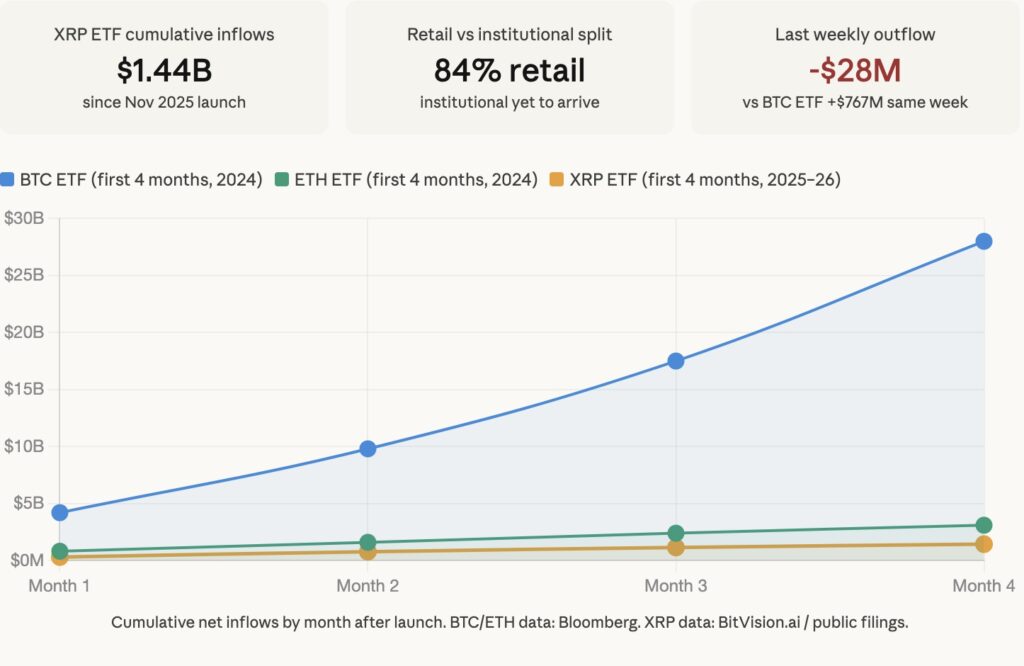
Bitcoin ETFs reached $50B+ AUM in one year.
XRP ETFs at $1.44B are still early.
Currently:
84% of flows = retail
The institutional wave hasn’t started yet.
The Settlement Layer Is Already Being Built
While headlines focus on regulation, infrastructure has quietly advanced.
As detailed in our prior analysis: AUDD Launches on XRPL: A Settlement Breakthrough
The XRP Ledger now supports multi-currency regulated settlement rails:
- RLUSD (USD) — U.S.-aligned stablecoin framework
- EURCV (EUR) — Société Générale MiCA-compliant stablecoin
- AUDD (AUD) — ASIC-regulated digital AUD
This is not random innovation.
This is the emergence of a blockchain-based correspondent banking system —
where XRPL becomes the settlement layer across currencies.
The infrastructure existed before March 17.
The ruling simply unlocked U.S. participation.
The One Gap That Remains: Legislative Permanence
A critical nuance:
A binding rule is powerful — but not permanent.
Only Congress can lock this framework into law.
The Digital Asset Market CLARITY Act:
- Passed House (294–134)
- Cleared Senate Agriculture Committee
- Awaiting Senate Banking Committee markup (April 2026)
If passed:
→ XRP’s commodity status becomes legally permanent
If delayed:
→ Framework remains strong, but reversible
The Bigger Picture
This is not about XRP’s price.
It’s about financial architecture.
The U.S. just defined a model:
- Digital commodities → settlement layer
- Stablecoins → transactional layer
- Digital securities → asset layer
XRP sits at the intersection of all three.
At the same time:
- RLUSD approaching $1.6B market cap
- Ripple expanding globally
- Federal Reserve access under discussion
- IPO trajectory forming
The legal uncertainty is gone.
The infrastructure is live.
The only variable left is adoption velocity.
Watch the Calendar
- March 27 — XRP ETF decision
- April (post-Easter) — CLARITY Act markup
- Q2 2026 — Ripple IPO developments
BitVision.ai will be tracking all of it. Stay tuned.