
In Previous article of this series, we introduced the emerging Truth Economy — a new infrastructure category in which verified data serves as the foundation of digital markets.
In article ” The Data Capture Layer of the Truth Economy“, we explored how Veritize™ captures physical reality in real time, transforming real-world events into tamper-evident data streams.
But capturing reality is only the first step.
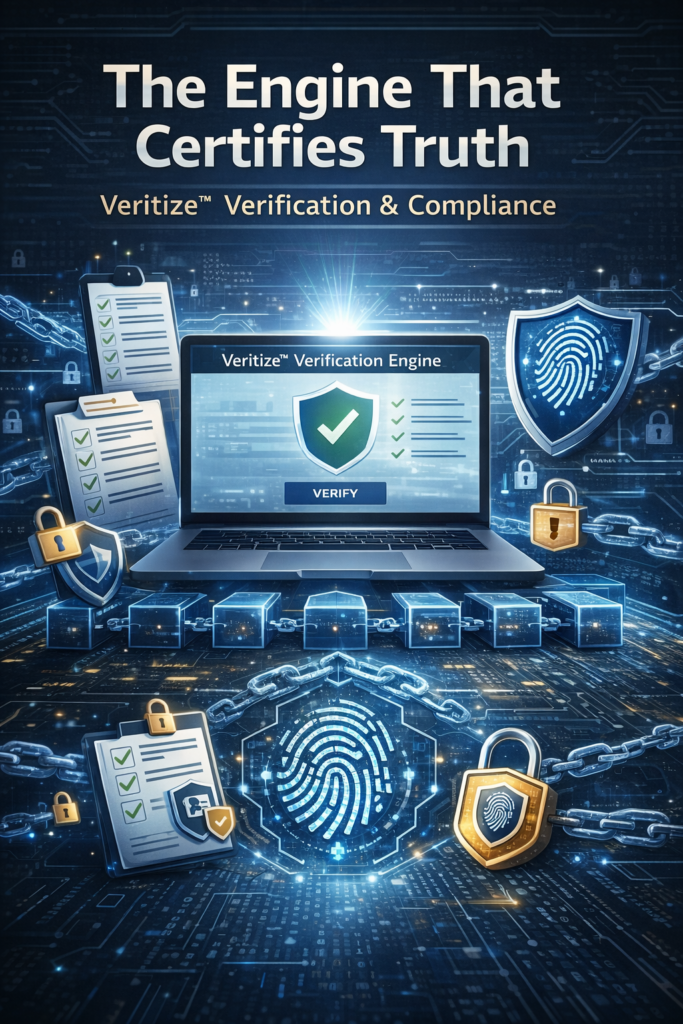
For verified data to function at an institutional scale, it must be certified, auditable, and governed by enforceable rules. This is where the Verification & Compliance Engine becomes the heart of truth infrastructure.
From Data to Certified Truth
Raw captured data — even when cryptographically signed — is not yet compliance-ready.
Enterprises, regulators, and financial institutions require more than data collection. They require:
• Rule-based validation
• Continuous auditability
• Policy enforcement
• Jurisdictional compliance
• Standardized reporting formats
The Veritize™ Verification & Compliance Engine performs this role. It applies programmable rule systems that continuously evaluate captured events against defined regulatory, operational, and contractual requirements.
Only when events meet these conditions are they elevated to certified truth records within Data Wallet™ containers.
This transforms verification from a periodic audit process into a continuous, automated compliance rail.
Programmable Compliance
Traditional compliance is manual, slow, and expensive.
Programmable compliance is:
• Continuous
• Machine-enforceable
• Real-time auditable
• Cryptographically provable
For example:
• Is this “Made in USA” claim compliant with FTC origin thresholds?
• Does this ESG report meet jurisdictional disclosure rules?
• Was this pharmaceutical batch produced under approved conditions?
• Does this dataset meet AI data governance requirements?
Veritize™ encodes these requirements into machine-executable verification logic — producing regulator-ready evidence in real time.
For investors, this is a key insight:
Compliance automation is not a cost center — it is a scalable revenue layer.
Auditability Without Intermediaries
Because verification results are anchored to immutable blockchain records, audit trails no longer rely on third-party intermediaries, paper archives, or trust-based attestations.
Instead:
• Regulators can query real-time compliance dashboards
• Enterprises can provide instant audit reports
• Financial institutions can underwrite tokenized assets with provable provenance
• Consumers can verify authenticity with a scan
This disintermediation reduces friction, cost, and liability — while expanding the addressable market for verification platforms.
Standardization Creates Network Effects
As verification rules become standardized across industries, a powerful dynamic emerges:
• Shared compliance schemas
• Interoperable data wallets
• Portable provenance records
• Cross-border regulatory acceptance
Once a verification standard gains adoption, switching costs rise and network effects compound.
For investors, this signals a familiar pattern:
The emergence of category-defining infrastructure platforms.
Interoperability with Broader Verification Ecosystems
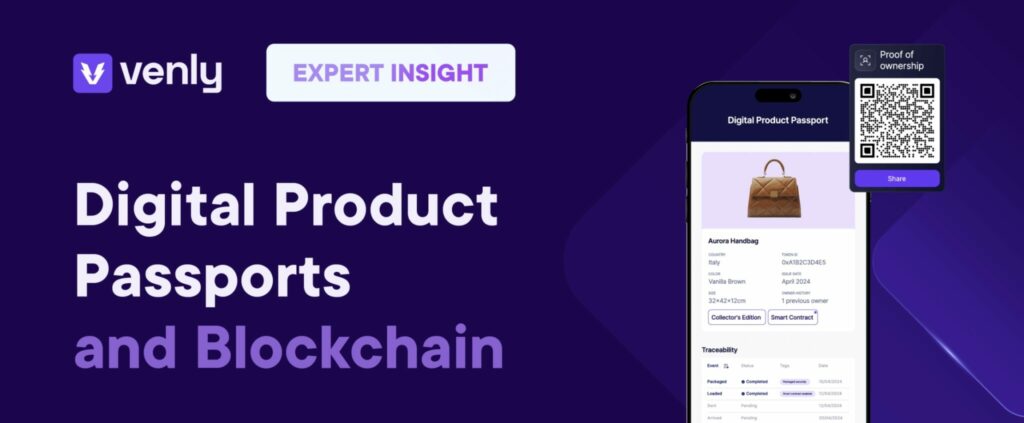
To extend trust across sectors, Veritize™ is designed to interoperate with complementary verification networks — including Verity One, which focuses on environmental assets, traceable commodities, and real-world data credits.
This interoperability allows certified data to move seamlessly across supply chains, sustainability markets, and financial tokenization platforms — creating a composable verification fabric for global trade.
Why This Layer Defines the Moat
Data capture can be commoditized.
Blockchain anchoring can be replicated.
But verification logic, compliance rules, and institutional adoption create a durable competitive advantage.
Platforms that embed themselves into regulatory workflows, enterprise compliance systems, and industry standards become extremely difficult to displace.
For investors, this is where infrastructure becomes defensible.
Looking Ahead
We have now traced the Truth Economy from:
• The macro need for verified data
• Real-world data capture
• Verification, governance, and compliance
In the next article of this series, we will examine why these systems are forming a new investable infrastructure category — and how platforms like MADE IN USA INC, through Veritize™ and Data Wallet™, are positioning themselves at the center of this shift.
Truth is no longer a promise.
It is becoming enforceable code.
And enforceable code is an investable infrastructure.