
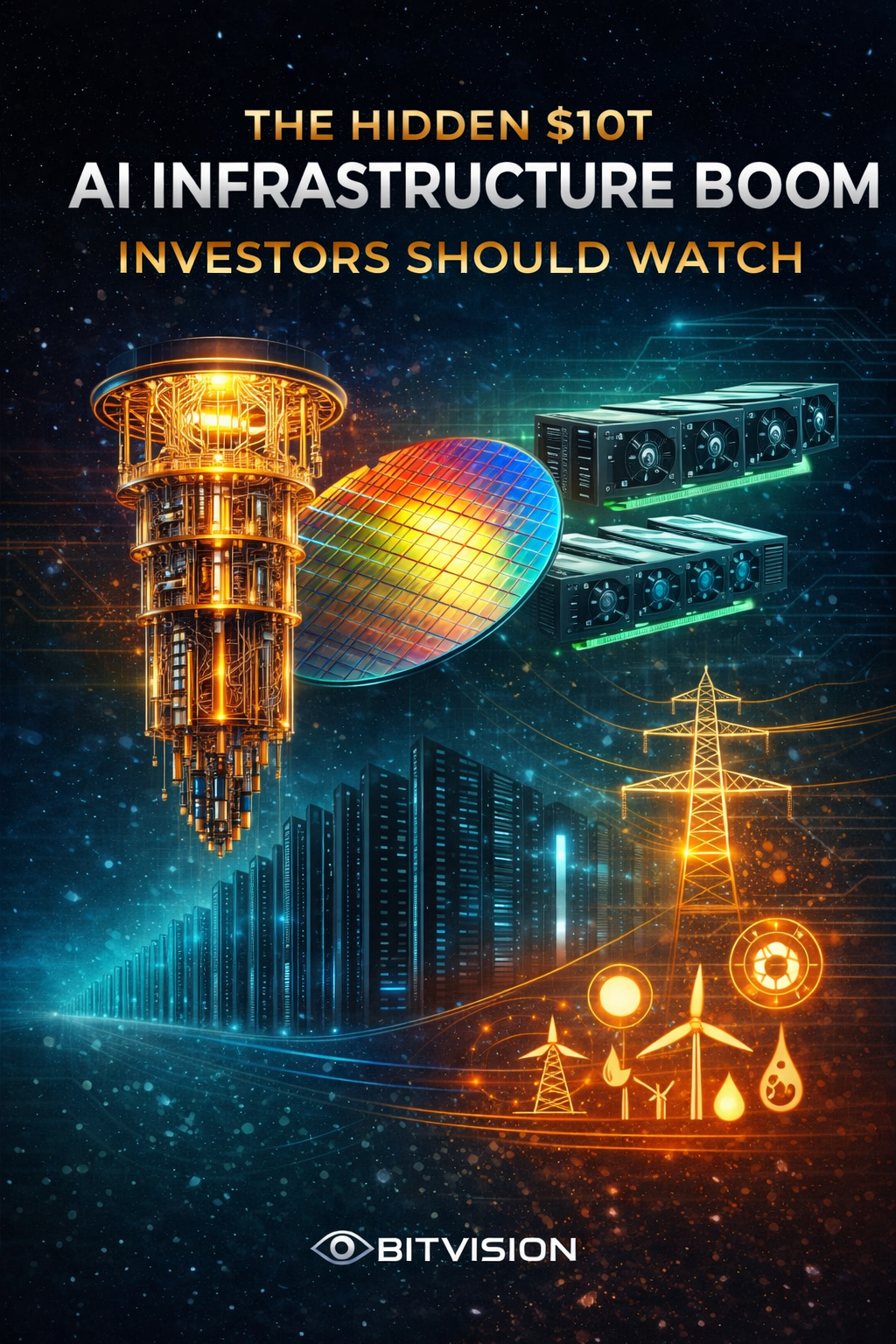
Artificial intelligence is often described as a software revolution.
Chatbots write essays. Algorithms generate images. AI copilots write code.
But behind the scenes, something much bigger is unfolding — a massive physical infrastructure build-out that may reshape the global economy over the next decade.
While investors debate the next AI startup, governments and technology giants are quietly pouring trillions of dollars into the foundations that make AI possible: data centers, semiconductor fabrication plants, power grids, and high-speed networks.
In fact, research suggests that global data-center infrastructure could require nearly $7 trillion in capital investment by 2030, with more than $5 trillion dedicated specifically to AI computing demand.
This is not simply a technology upgrade.
It is the construction of a new digital industrial system.
And for long-term investors, the opportunity may lie not in speculative AI startups — but in the stable companies quietly building the backbone of the AI economy.
The Real Engine of the AI Revolution
Artificial intelligence is extraordinarily compute-hungry.
Training a modern large language model requires enormous clusters of GPUs, specialized networking hardware, and massive data pipelines. Every query, every generated image, every AI assistant request must be processed somewhere.
That “somewhere” is the AI data center.
Think of these facilities as the factories of the digital age — vast warehouses filled with servers running around the clock, consuming enormous amounts of electricity and cooling capacity.
The scale of this infrastructure is staggering.
Major technology companies are planning hundreds of billions of dollars in spending on AI infrastructure this decade. Meanwhile, telecom networks, fiber infrastructure, and power grids must expand in parallel to support the demand.
This transformation is already visible across the United States, Europe, and Asia, where new hyperscale data centers are being constructed at unprecedented speed.
Even mid-sized infrastructure providers are investing hundreds of millions of dollars in fiber networks to connect emerging AI data-center hubs.
In other words, the AI boom is not just about algorithms.
It is about infrastructure at planetary scale.
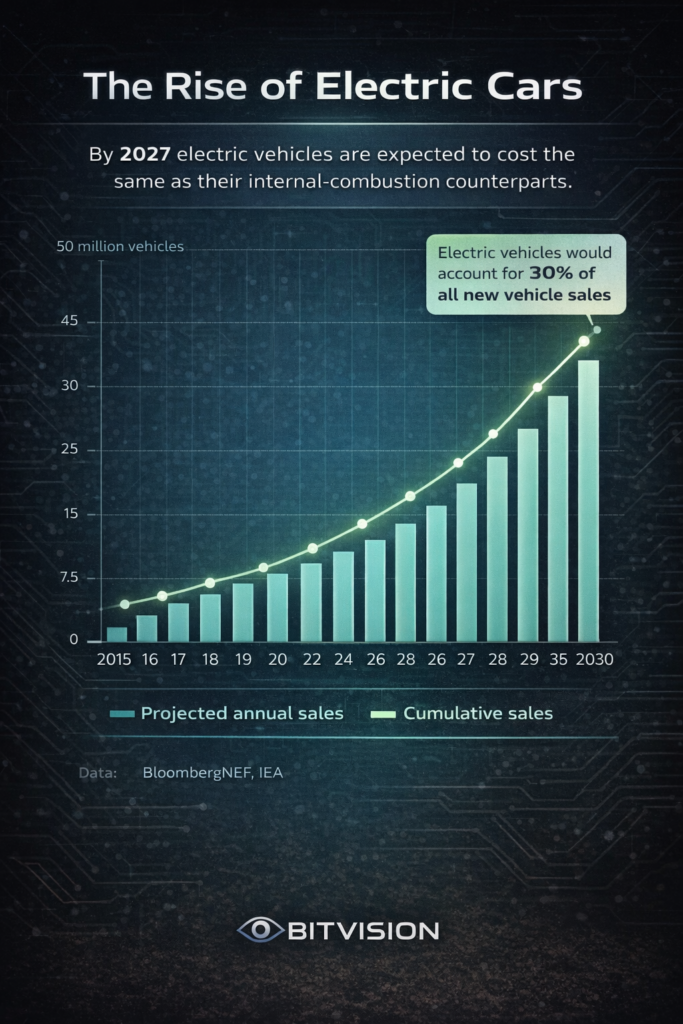
The AI Stack: Chips, Data Centers, and Power
To understand where the long-term investment opportunities may lie, it helps to think about AI as a layered system.
At the top sits software: the chatbots, automation tools, and intelligent applications we interact with every day.
But beneath that layer is a massive industrial stack.
1. AI Chips
Semiconductors designed for machine learning — such as GPUs and specialized AI accelerators — perform the heavy mathematical work required for training and inference.
2. Data Centers
These chips must operate in vast computing clusters housed inside data centers that require advanced cooling, networking, and energy systems.
3. Energy Infrastructure
Power has become one of the biggest bottlenecks for AI growth. Large AI facilities consume electricity on the scale of small cities.
As a result, the AI revolution is simultaneously triggering a global expansion of energy infrastructure, fiber networks, and semiconductor manufacturing.
This is why the largest winners in past technology cycles were often not consumer companies — but infrastructure providers.
The Next Frontier: AI Data Centers Beyond Earth
If the scale of today’s AI infrastructure race seems extraordinary, the next stage may be even more ambitious.
Some technology leaders are already exploring the idea of placing data centers in space.
Companies including SpaceX are investigating orbital computing platforms powered by solar energy, which could potentially overcome the energy constraints facing Earth-based data centers.
The concept is radical but logical.
AI computing requires enormous power. Solar energy in orbit is far more abundant and constant than on Earth. By placing data centers in space, engineers could potentially bypass terrestrial limitations such as land, cooling, and energy constraints.
According to recent reporting, future satellite networks could eventually host AI workloads directly in orbit, enabling a new generation of global computing infrastructure.
Whether these plans unfold in five years or twenty, they illustrate something important:
The infrastructure race for artificial intelligence has only just begun.
(You may also follow the latest developments directly from SpaceX’s official updates:
)
Why Smart Investors Should Focus on Infrastructure
History shows that technology revolutions tend to follow a predictable pattern.
Early excitement focuses on consumer-facing companies — the apps, platforms, and flashy innovations.
But the long-term winners often emerge from deeper layers of the ecosystem.
During the internet boom, companies building fiber networks, semiconductor equipment, and cloud infrastructure ultimately became some of the most valuable businesses in the world.
The same pattern may repeat with AI.
Instead of chasing speculative startups, investors may benefit from identifying companies that:
- supply critical semiconductor equipment
- build data-center infrastructure
- provide testing and measurement systems
- design high-performance networking hardware
- operate cloud platforms
These businesses tend to have something many AI startups lack:
stable revenues, diversified customers, and durable competitive advantages.
This is why at BitVision we often focus on infrastructure companies when analyzing emerging technology trends.
In a previous analysis of semiconductor leaders like ASML and TSM, we explored how foundational hardware companies quietly power the global AI ecosystem.
The lesson remains the same today.
The companies building the tools and infrastructure behind technological revolutions often create the most durable value.
The BitVision Perspective
The AI revolution is real. But like every technology boom, it will include hype, speculation, and inevitable failures.
For investors seeking long-term success, the most important principle may be surprisingly simple:
Protect capital first.
Instead of chasing every AI headline, consider focusing on the companies quietly building the infrastructure that makes artificial intelligence possible.
These businesses may not deliver overnight riches.
But over time, they may offer something far more valuable:
stable growth aligned with one of the most powerful technological transformations in human history.
The hidden $10 trillion AI infrastructure boom has already begun.
And the investors who understand its foundations may be the ones best positioned to benefit from it.